Cement ship unloader system working principle in bulk cement handling
In bulk cement logistics, the unloading stage plays a decisive role in ensuring stable material flow from marine transportation to onshore storage. A cement ship unloader system is specifically engineered to handle fine cement powder efficiently while maintaining continuous operation and strict dust control. Understanding the cement ship unloader system working principle is essential for ports, cement terminals, and industrial operators, as it explains how cement is extracted from the ship’s hold, conveyed through enclosed systems, and safely discharged into silos. This article focuses on the technical working principle of cement ship unloader systems and their function within modern bulk cement handling operations.
Introduction to cement ship unloader system working principle
In modern cement logistics, unloading bulk cement from seagoing vessels is a critical operation that directly affects supply chain efficiency. A cement ship unloader system is specifically designed to ensure that bulk cement handling is performed in a continuous, controlled, and environmentally safe manner. For ports, cement terminals, and cement plants, understanding the working principle of a cement ship unloader system is essential for achieving stable operation and optimal unloading performance.
The working principle of this system goes beyond simple material discharge. It involves a coordinated process that includes material intake from the ship’s hold, controlled conveying, dust containment, automated control, and final discharge into storage facilities. Each stage plays a vital role in maintaining unloading capacity, reducing energy consumption, and preventing material loss within the cement bulk unloading system.
Overview of cement ship unloader system working principle
At its core, a cement ship unloader system is an integrated unloading solution used to transfer bulk cement from marine vessels to onshore handling facilities. It operates as a key component within a port cement unloading system or cement terminal unloading system, serving as the interface between maritime transport and inland storage or production processes.
The working principle of a cement ship unloader system is based on creating a controlled and continuous flow of powdered cement. Depending on the system design, this flow may be achieved through pneumatic conveying or mechanical conveying methods. Regardless of the technology used, the primary function of the cement ship unloading equipment is to unload cement efficiently while maintaining material integrity and minimizing dust emissions throughout the bulk cement handling process.
Basic structure related to cement ship unloader system working principle
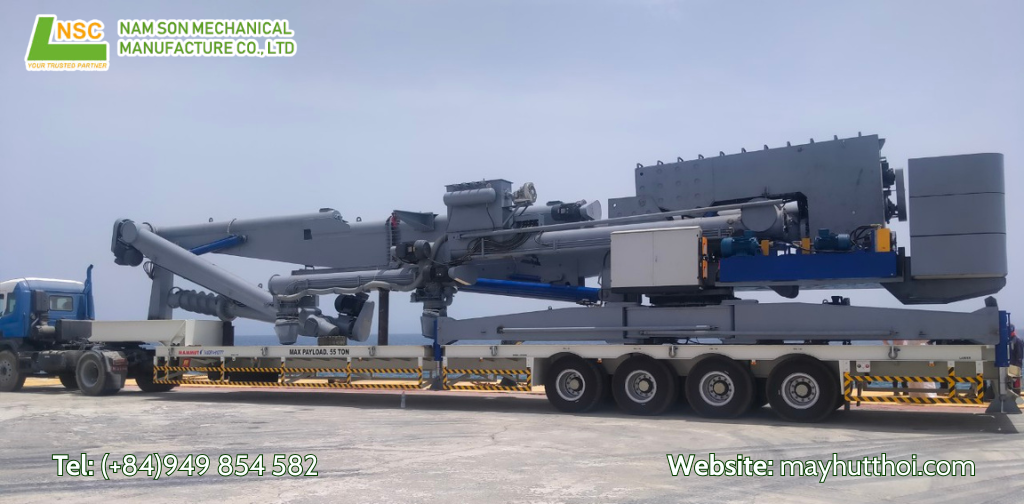
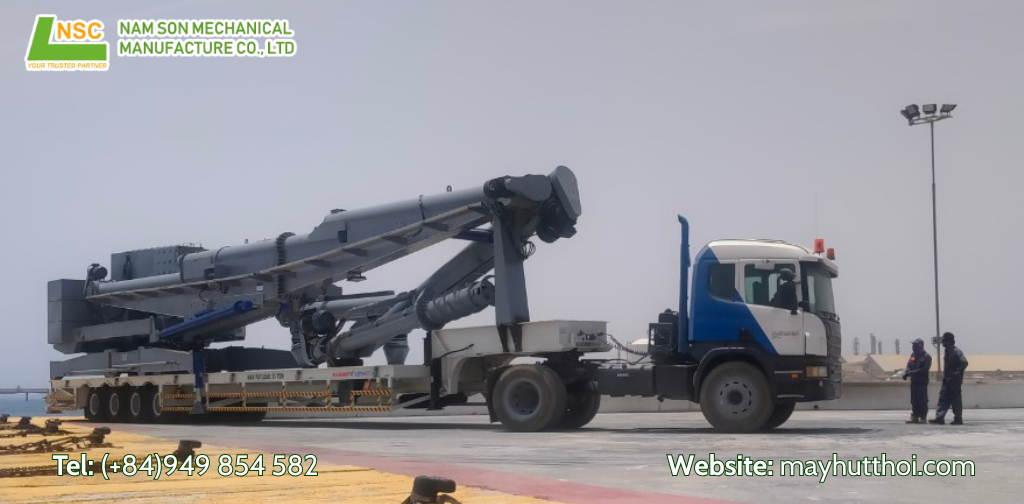
To fully understand the working principle of a cement ship unloader system, it is necessary to examine its basic structural configuration. The system begins with a material intake unit positioned to access cement directly from the ship’s cargo hold. This intake mechanism is engineered to handle fine cement powder and maintain consistent material recovery during unloading.
Following material intake, the cement is transferred through a conveying section that forms the core of the cement unloading machinery. In many installations, this section incorporates a cement pneumatic conveying system, which enables smooth and enclosed material transport. The final structural element is the control and monitoring system, which synchronizes all operational parameters and ensures that the entire cement ship unloader system functions reliably during bulk cement handling operations.
Cement ship unloader system working principle
Cement ship unloader system working principle – Material intake from ship hold
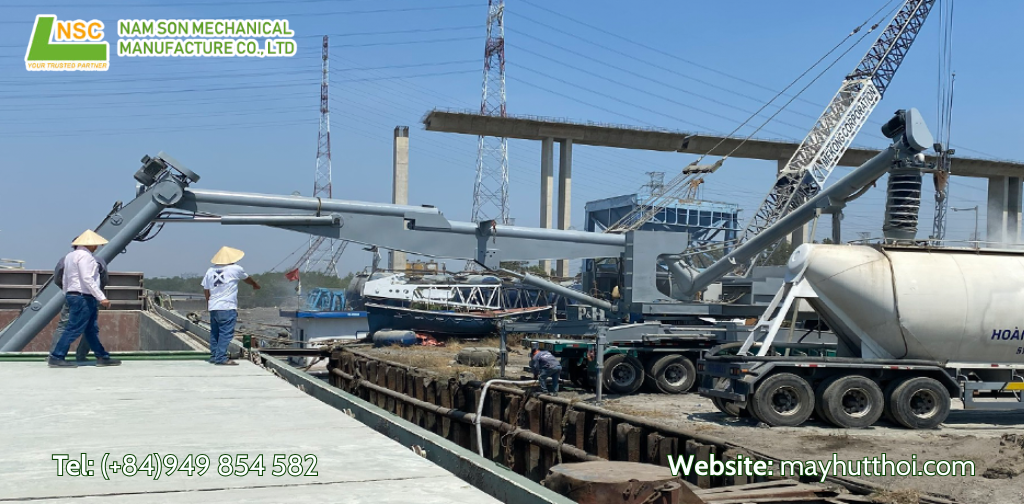
The first operational stage in the cement ship unloader system working principle is the extraction of cement from the vessel’s hold. Once the ship is securely berthed, the unloader is accurately positioned to reach the bulk cement cargo. The unloading process begins by initiating the cement ship unloading process, during which cement is collected from the bottom of the ship’s hold.
In pneumatic systems, a pressure differential is created to draw cement powder into the intake pipeline. This controlled suction allows continuous material flow while preventing excessive turbulence. Proper regulation at this stage is essential, as stable intake conditions directly influence the overall continuity and efficiency of the cement bulk unloading operation.
Cement ship unloader system working principle – Cement conveying process
After cement is extracted from the ship’s hold, it enters the conveying phase of the cement ship unloader system. This stage connects the offshore unloading operation to the onshore handling infrastructure. Cement is transported through pipelines or enclosed channels that form the cement unloader conveyor system, depending on the selected working principle.
The conveying process must maintain a balance between material velocity and operating pressure. Insufficient conveying speed may result in material settling or blockage, while excessive velocity increases equipment wear and energy consumption. For this reason, the working principle of a cement ship unloader system is carefully engineered to ensure stable and efficient cement transfer throughout the bulk cement handling cycle.
Cement ship unloader system working principle – Discharge to storage system
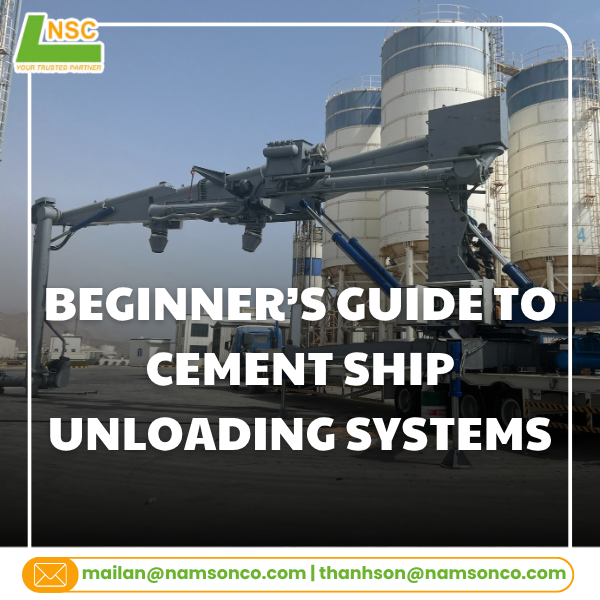
Once the cement reaches the onshore facility, the final stage of the cement ship unloader system working principle involves discharging the material into storage or processing units. Typically, cement is transferred directly into silos through a controlled cement unloading to silo system, ensuring a smooth transition from conveying to storage.
During discharge, system pressure and material flow are precisely regulated to prevent segregation, compaction, or dust release. Stable discharge conditions help preserve cement quality while maintaining continuity within the bulk cement handling system. This stage completes the physical unloading cycle and prepares the cement for subsequent handling or production processes.
Cement ship unloader system working principle – Control and automation
Modern cement ship unloader systems rely heavily on automation to maintain operational stability. Control systems monitor every stage of the unloading process, from material intake to final discharge, ensuring synchronized operation across all components.
Through the use of an automated cement unloading system, key parameters such as conveying pressure, airflow rate, and material throughput are continuously adjusted in response to real-time conditions. This level of control enhances the reliability of the cement ship unloader system and significantly reduces operational risks during bulk cement handling in port environments.
Types of cement ship unloader system working principles
In practical applications, the cement ship unloader system operates based on two primary working principles. A pneumatic cement ship unloader uses airflow to transport cement powder through enclosed pipelines, making it highly suitable for fine materials and strict dust control requirements. In contrast, a mechanical cement ship unloader relies on mechanical components to move cement and is often selected for installations requiring high unloading capacity.
Although the operational mechanisms differ, both working principles are designed to achieve reliable and efficient bulk cement handling while maintaining continuous unloading performance.
Cement ship unloader system working principle and dust control
Due to the fine and airborne nature of cement powder, dust control is an integral part of the cement ship unloader system working principle. Throughout the unloading process, the system is typically designed as a sealed structure combined with filtration and containment measures to form a dust free cement unloading system.
An enclosed cement unloading system significantly reduces dust emissions, protecting both the operating environment and personnel. Effective dust control not only ensures regulatory compliance but also improves the long-term reliability of the cement ship unloader system, especially in busy port cement unloading operations.
Conclusion on cement ship unloader system working principle in bulk cement handling
In conclusion, the cement ship unloader system working principle is based on a carefully coordinated sequence of material intake, controlled conveying, regulated discharge, and automated control. Each phase contributes to the overall efficiency and safety of bulk cement handling operations at ports and cement terminals.
A clear understanding of how a cement ship unloader system works enables operators and engineers to optimize unloading performance, reduce material loss, and ensure stable long-term operation. As bulk cement logistics continue to evolve, the working principle of these systems remains fundamental to efficient and sustainable cement handling solutions.
Contact us
If you are looking for a reliable cement ship unloader system designed for efficient and dust-free bulk cement handling, please contact us for technical consultation and system configuration support tailored to your port or cement terminal requirements. ° Website: mayhutthoi.com| namsonco.com ° Alibaba: dthson.trustpass.alibaba.com ° Facebook: facebook.com/NamSonPneumaticConveyor ° Zalo/Whatsapp: (+84) 949854582 ° Email: mailan@namsonco.com | thanhson@namsonco.com