
Hotline/Whatsapp: +84 949 854 582thanhson.namson@gmail.com


Efficient bulk cargo handling is essential for modern seaports to maintain productivity, reduce operating costs, and meet growing global shipping demands. Port unloading equipment plays a critical role in transferring bulk materials from vessels to storage facilities, conveyor systems, and transportation networks. Choosing the right machinery helps port operators improve unloading speed, minimize material loss, and ensure safe operations.
From coal and iron ore to grain, cement, and fertilizers, modern unloading systems offer different solutions for handling various cargo types. Understanding their functions, components, and advantages can help port operators select suitable equipment for their operational requirements.
Port unloading equipment refers to specialized machinery and systems used to discharge cargo from ships at seaports and marine terminals. These systems are particularly important for bulk cargo operations, where large quantities of loose materials must be transferred efficiently.
Marine cargo handling equipment includes ship unloaders, grab cranes, conveyor belts, hoppers, and material transfer systems. Together, these machines create an integrated unloading process that connects vessels with onshore storage and transportation facilities.
Efficient cargo discharging equipment helps increase port throughput capacity, reduce vessel turnaround time, and improve overall terminal productivity.
=>See more: What is a ship unloader? A complete guide to its function and applications
Different unloading technologies are designed to accommodate specific cargo characteristics, vessel sizes, and operational conditions.
Grab ship unloaders use mechanical or hydraulic grab buckets to collect bulk materials from vessel holds. They are commonly used for coal, iron ore, minerals, and other heavy materials. Their flexible operation makes them suitable for ports handling different cargo types.
Continuous ship unloaders transfer materials through an uninterrupted mechanical conveying process. Depending on their design, they may use bucket elevators, screw conveyors, or other conveying mechanisms. These systems are suitable for high-volume operations requiring consistent unloading performance.
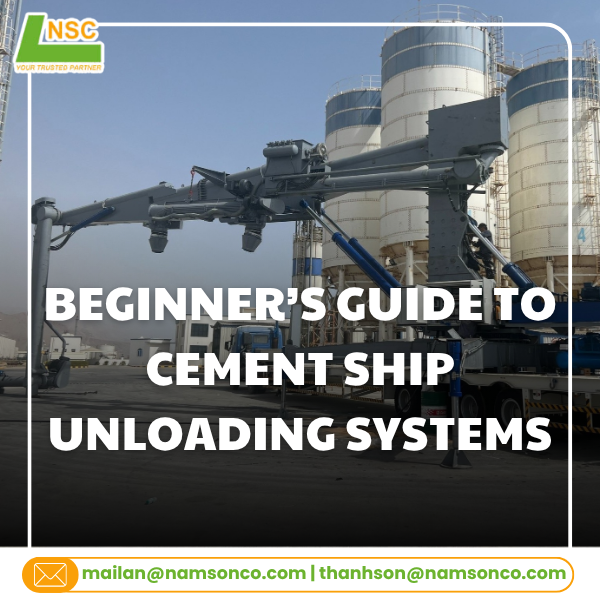
Pneumatic ship unloaders use air pressure or vacuum systems to transport fine and powdery materials through enclosed pipelines. They are commonly applied to grain, cement, and other materials that require controlled handling and reduced dust emissions.
Mobile harbor cranes provide flexible unloading capabilities for different vessel sizes and cargo requirements. Meanwhile, belt conveyor unloading systems transport discharged materials from receiving hoppers to storage areas, processing facilities, or other transportation equipment.
Selecting appropriate machinery depends heavily on cargo properties, including density, particle size, moisture content, and flow characteristics.
Dry bulk unloading equipment is widely used for handling industrial and agricultural materials.
Coal and iron ore: Heavy-duty grab ship unloaders and conveyor systems support large-volume unloading operations.
Grain and agricultural products: Pneumatic ship unloaders and enclosed conveying systems help protect cargo quality and minimize contamination.
Cement and clinker: Pneumatic and screw conveying systems provide controlled material transfer.
Fertilizers and minerals: Specialized hoppers, conveyors, and dust collection systems improve handling efficiency.
Biomass and wood chips: Grab buckets and belt conveyors accommodate lightweight materials with different particle sizes.
Matching unloading equipment to cargo characteristics helps reduce material loss and maintain consistent operating performance.
A complete port unloading system consists of several interconnected components that work together to ensure continuous material movement.
Grab buckets collect bulk materials from vessel holds and transfer them to receiving hoppers. Hydraulic grab buckets are commonly used for handling heavy materials and improving loading accuracy during unloading operations.
Ship unloading hoppers receive discharged materials before transferring them to conveyor belts or other transportation equipment. Material feeding systems help regulate the flow and prevent interruptions.
Port conveyor systems transport bulk cargo between unloading points, stockyards, and storage facilities. Belt conveyors are particularly useful for continuous material transfer over long distances.
Dust collection systems help control airborne particles during cargo handling. Hydraulic and pneumatic components also support equipment movement, material transportation, and operational control.
Modern port unloading equipment offers several advantages for seaport operations.
High-capacity ship unloaders can handle large volumes of bulk materials within shorter operating periods. Appropriate equipment selection helps maintain stable unloading performance.
Faster unloading processes reduce the time vessels spend at berths, allowing ports to accommodate more shipping operations and improve terminal utilization.
Automated port handling systems can integrate sensors, monitoring technologies, and remote controls to improve equipment coordination and reduce manual intervention.
Enclosed conveying systems, controlled feeding mechanisms, and dust collection equipment help reduce material loss and environmental impact.
Modern safety systems, overload protection, and equipment monitoring help minimize operational risks and improve reliability during bulk cargo handling.
Choosing suitable equipment requires evaluating several operational factors rather than focusing only on purchasing costs.
First, consider the type and characteristics of bulk cargo being handled. Different materials require different unloading mechanisms and conveying technologies.
Next, determine the required unloading capacity based on vessel size, cargo volume, and port operating schedules. Equipment performance should match the terminal's daily throughput requirements.
Port layout and available installation space are also important. Factors such as berth configuration, vessel dimensions, conveyor routes, and storage locations influence equipment selection.
Finally, compare energy consumption, maintenance requirements, installation costs, and customization options. Heavy-duty port unloading equipment with reliable components and accessible spare parts can help reduce long-term operating expenses.
Working with an experienced port unloading equipment manufacturer is important for achieving reliable and efficient operations. Buyers should evaluate manufacturing capabilities, engineering experience, equipment quality, and customization options.
A professional supplier should provide technical consultation, installation guidance, commissioning support, and after-sales maintenance services. These capabilities help ensure that unloading machinery meets the specific requirements of each seaport.
Long-term technical support and spare parts availability are also essential considerations when investing in industrial port equipment.
The development of smart port technologies is shaping the future of bulk cargo handling. Remote-controlled ship unloaders, automated operating systems, and intelligent monitoring technologies are helping ports improve productivity and operational control.
Energy-efficient machinery and eco-friendly unloading solutions are also gaining attention. Technologies designed to reduce dust emissions, energy consumption, and material loss will become increasingly important as seaports pursue more sustainable operations.
Common equipment includes grab ship unloaders, continuous ship unloaders, pneumatic ship unloaders, mobile harbor cranes, and belt conveyor systems.
Grab ship unloaders collect materials using grab buckets, while continuous ship unloaders transfer cargo through continuous mechanical conveying mechanisms.
These systems can handle coal, iron ore, grain, cement, clinker, fertilizers, minerals, biomass, and other bulk materials.
Ports can improve efficiency by selecting suitable machinery, optimizing conveyor systems, implementing automation, and maintaining equipment regularly.
Efficient bulk cargo handling depends on selecting the right port unloading equipment for specific cargo types, vessel requirements, and terminal operating conditions. From grab ship unloaders to pneumatic systems and conveyor technologies, each solution contributes to faster material transfer, reduced operating costs, and improved port productivity.
Investing in reliable unloading machinery and integrated handling systems allows seaports to optimize daily operations while meeting increasing demands in global maritime logistics.
✱ Website: mayhutthoi.com| namsonco.com
✱ Alibaba:dthson.trustpass.alibaba.com
✱ Facebook: facebook.com/NamSonPneumaticConveyor
✱ Zalo/Whatsapp:(+84) 949854582
✱ Email: mailan@namsonco.com | thanhson@namsonco.com


Copyright © 2016 Nhuamisa