Discover how a
cement pneumatic conveyor works and why it is essential in modern cement plants. Learn its working principle, main components, and advantages for dust-free, efficient, and safe bulk material handling.
What is a cement pneumatic conveyor?
A
cement pneumatic conveyor is a specialized system designed to transport cement powders efficiently through pipelines using
compressed air or other gases. Unlike conventional mechanical conveyors, this
pneumatic transport system ensures
dust-free, contamination-free, and
continuous material handling, which is essential for maintaining both
plant hygiene and product quality.
In modern cement plants, a
cement pneumatic conveying system connects silos, hoppers, and processing units, allowing for seamless material flow throughout the facility. This
air conveying technology reduces manual handling, minimizes spillage, and supports
long-distance transport of bulk cement. Its flexibility allows pipelines to be routed around equipment and plant structures, a task that can be challenging with belt or screw conveyors.
By integrating a pneumatic system, cement plants achieve
efficient production,
consistent material flow, and
improved operational safety. This technology is particularly valuable in facilities where
dust control,
environmental compliance, and
product quality are critical priorities.
See more: Top 5 applications of cement pneumatic conveyors in modern cement plants
Working principle of a cement pneumatic conveyor
The
working principle of a cement pneumatic conveyor is based on transporting cement particles suspended in a controlled
air or gas stream. Depending on the
material's characteristics and production requirements, the system operates in either dense-phase conveyingfor heavy or cohesive materials ordilute-phaseconveying for lighter, free-flowing powders.
Air generation and pressure control
The process begins with generating
compressed air using a
blower or air compressor. This pressurized air provides the driving force to suspend and propel cement particles through the pipeline. Maintaining the correct pressure and airflow velocity is critical to ensure smooth transport without settling, clogging, or excessive wear on the pipeline. Airflow is adjusted based on the
bulk density of cement, the
length of the pipeline, and the desired
conveying rate.
Material feeding into the system
Cement is introduced into the airflow via a
rotary valve or
airlock valve, which allows precise control of the feed rate while maintaining system pressure. The
material feeder ensures a consistent and measured flow of cement, preventing surges or gaps in the air-material mixture. In dense phase systems, cement moves in slugs at a lower velocity, reducing pipeline wear and minimizing air leakage. In dilute phase systems, cement particles remain suspended individually in high-velocity airflow, suitable for long-distance transport.
Conveying through the pipeline
Once inside the pipeline, cement is carried by the moving air. In
dense phase conveying, material moves in discrete plugs or slugs at a controlled speed, minimizing settling and wear, especially for heavy or cohesive powders. In
dilute phase conveying, the cement particles are dispersed in a faster-moving air stream, allowing transportation over longer distances efficiently. Proper pipeline design—including
bends,
elbows, and
diverter valves—ensures that flow remains consistent and prevents turbulence, reducing erosion and maintaining system efficiency. The
solids loading ratio and
conveying velocity are carefully controlled to sustain smooth, uninterrupted movement.
Separation and collection at the endpoint
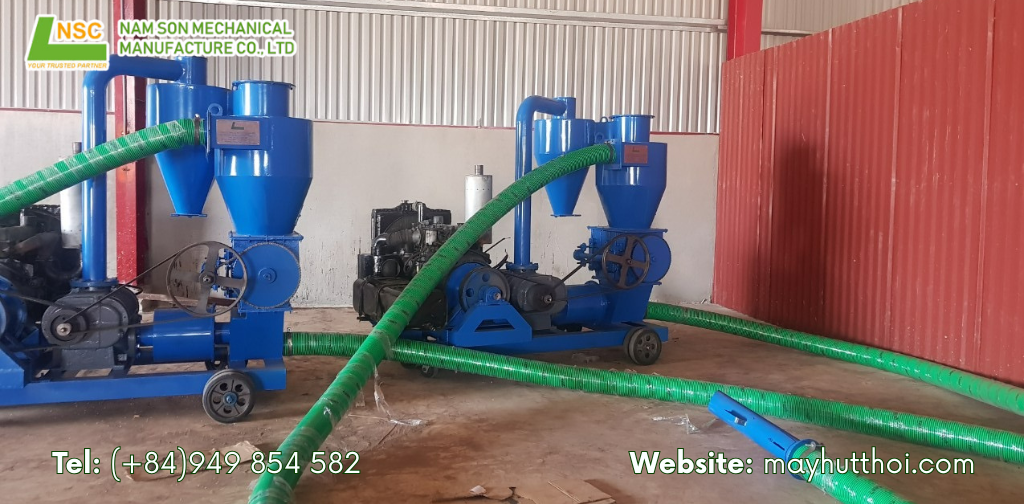
At the end of the pipeline, cement is separated from the air stream using a
receiver hopper or
cyclone separator. The cement is collected for storage or further processing, while the air is safely vented or recirculated. This
closed-loop design prevents dust emissions, ensuring a
clean and safe work environment and maintaining the
quality of the cement throughout the process.
Main components of a cement pneumatic conveying system
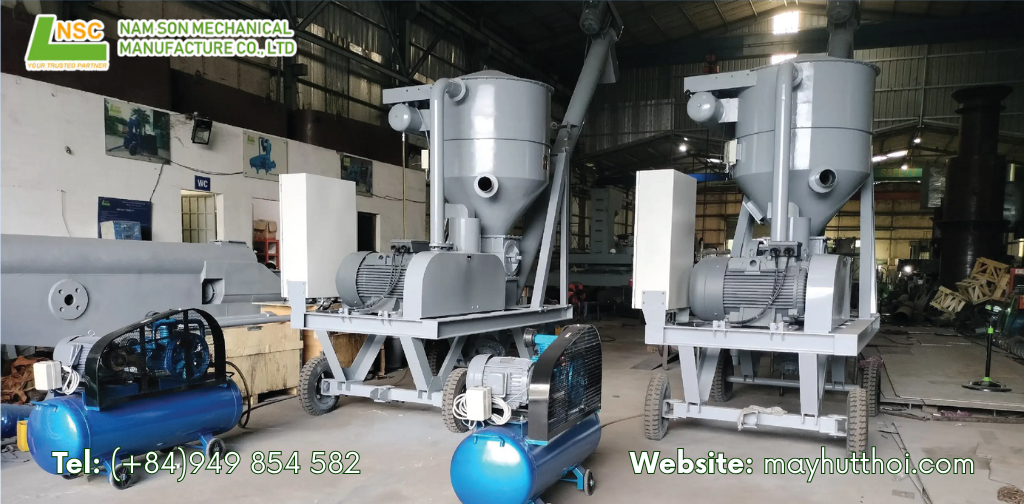
A functional cement pneumatic conveying system consists of several essential components:
+ Rotary valve/airlock valve: Controls the entry of cement into the air stream while maintaining system pressure.
+ Blower/air compressor: Generates the airflow required to transport cement through the pipeline.
+ Pipeline/conveying line: The conduit along which cement is carried from the feed point to the collection area.
+ Receiver hopper/cyclone separator: Collects cement and separates it from the airflow efficiently.
These components work in coordination to ensure continuous, efficient, and dust-free transfer. Many modern systems also incorporate sensors and control systems to monitor airflow, pressure, and feed rates, providing real-time feedback to maintain optimal operation and prevent potential blockages or system failures.
Advantages of using a cement pneumatic conveyor in cement plants
A cement pneumatic conveying system offers several significant benefits in industrial cement production. Its closed design ensures that cement is transported without generating dust, keeping production areas clean and protecting workers’ health. The system provides continuous and reliable material flow, allowing plants to maintain steady production rates without interruptions that are often associated with mechanical conveyors.
Pneumatic conveyors also allow for flexible layout and long-distance transport, enabling cement to be moved across complex plant layouts without additional mechanical handling. With fewer moving parts, the system requires less maintenance, reducing downtime and operational costs. Additionally, by minimizing dust exposure and handling risks, pneumatic conveyors enhance overall safety and protect the quality of cement throughout the transfer process. These advantages collectively make pneumatic systems an efficient, safe, and reliable solution for modern cement plants.

Conclusion: Understanding how a cement pneumatic conveyor works
In summary, a cement pneumatic conveyor works by using pressurized air to transport cement particles through pipelines, either in dense or dilute phase modes, depending on the material and production requirements. The system relies on key components—rotary valves, blowers, pipelines, and receiver hoppers—to ensure smooth, continuous, and dust-free transfer.
For cement plants, pneumatic conveyors provide enhanced operational efficiency, reduced maintenance, long-distance transport capability, and improved safety. By understanding the working principle, components, and advantages, engineers and operators can optimize cement handling, maintain high-quality production, and ensure a safe and environmentally compliant facility.
A cement pneumatic conveying system is more than a material transport method; it is a critical technology for modern industrial cement production, combining engineering efficiency, operational reliability, and environmental protection into a streamlined solution.
For expert guidance on cement pneumatic conveying systems, contact our team today. Optimize your plant’s efficiency, ensure dust-free operations, and maintain reliable material flow with our solutions.
Contact us
✱ Website: mayhutthoi.com| namsonco.com
✱ Alibaba: dthson.trustpass.alibaba.com
✱ Facebook: facebook.com/NamSonPneumaticConveyor
✱ Zalo/Whatsapp:(+84) 949854582
✱ Email: mailan@namsonco.com | thanhson@namsonco.com