
Hotline/Whatsapp: +84 949 854 582thanhson.namson@gmail.com


Efficient bulk cement unloading is essential for ports, cement terminals, and large-scale construction material operations. A high capacity cement ship unloader provides a reliable solution for transferring large quantities of bulk cement from vessels to storage facilities in a fast and controlled manner. By combining high unloading capacity, continuous material handling, and optimized conveying technology, this equipment helps reduce vessel turnaround time and improve overall terminal productivity.
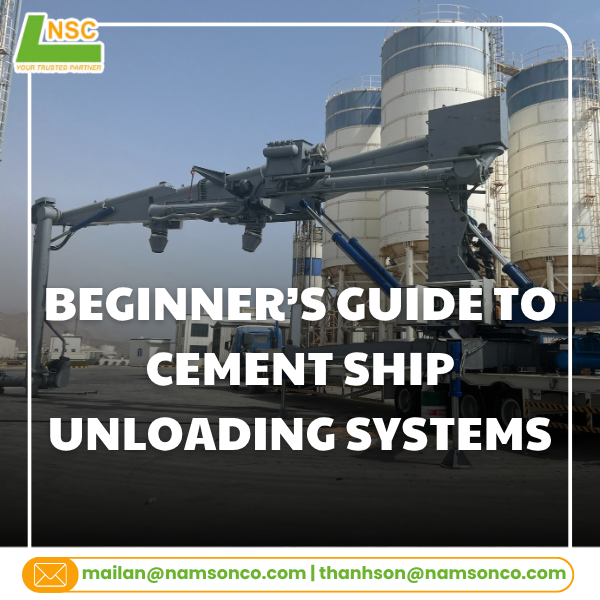
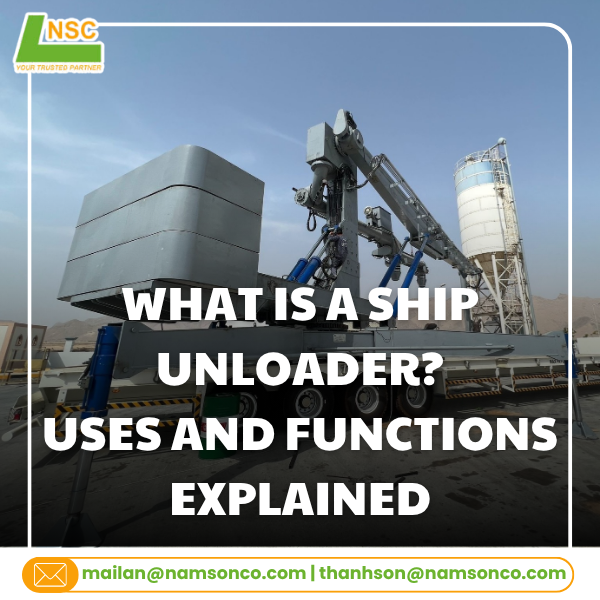
A high capacity cement ship unloader is specialized port equipment designed to unload bulk cement from cargo vessels and transfer it to downstream storage or conveying systems. Unlike conventional unloading methods, a high capacity system is engineered to handle large volumes of dry bulk cement efficiently while maintaining stable material flow.
The equipment typically works together with a cement unloading system, conveying equipment, dust control components, and storage silos. Depending on project requirements, the system can use pneumatic or mechanical conveying technology to move cement from the vessel to the designated storage area.
=>See more : 5 common errors when operating a cement ship unloader and how to fix them
During operation, the unloading system extracts bulk cement from the vessel's cargo hold and transports it through a controlled conveying route. The material is then transferred through a cement transfer system toward storage silos or other processing equipment.
A properly designed system coordinates the unloading equipment, conveying lines, filters, valves, and control systems to maintain continuous material flow. This integrated approach allows operators to achieve stable unloading performance while reducing material loss and dust emissions.
A complete cement handling equipment solution may include the ship unloader, pneumatic or mechanical conveyors, pipelines, dust filters, transfer points, valves, control systems, and silo connections. The configuration can be customized according to vessel size, cement characteristics, required capacity, and terminal layout.
For busy cement terminals, unloading speed directly affects vessel turnaround time and overall logistics efficiency. A high throughput cement unloader can move large quantities of cement within a shorter operating period, allowing vessels to return to service more quickly.
A high capacity system provides a high output cement ship unloader solution for operations that handle large cement shipments. Its continuous material flow can support rapid unloading and minimize interruptions during vessel discharge.
Compared with low-capacity equipment, a high-performance unloading system can improve terminal productivity while making better use of available berth time. This is particularly important for ports handling multiple bulk cement vessels on a regular schedule.
Fast unloading helps reduce the amount of time a vessel remains at the berth. An efficient bulk cement unloading system can therefore contribute to better berth utilization and smoother material logistics.
Continuous operation, automated controls, and optimized conveying routes can further improve unloading efficiency while reducing unnecessary manual intervention.
Large cement import and distribution facilities require high capacity port unloading equipment capable of handling significant material volumes. Integrating a high capacity ship unloader with storage silos and conveying equipment creates a complete bulk cement terminal handling solution.
The appropriate unloading technology depends on required capacity, material characteristics, transportation distance, energy consumption, and terminal design. Two common approaches are pneumatic and mechanical unloading.
A pneumatic cement ship unloader uses airflow to transport cement through enclosed pipelines. This technology is suitable for dry powdered materials such as cement and can provide an enclosed conveying route from the vessel to the storage system.
A pneumatic cement conveying system can also help reduce material exposure during transportation. With appropriate filtration and dust collection, the system can support cleaner bulk material handling operations.
A mechanical cement ship unloader uses mechanical conveying components to move cement from the vessel to the receiving system. Mechanical solutions can be suitable for applications where high material throughput and efficient bulk material transfer are required.
The selection between pneumatic and mechanical technology should be based on the specific capacity, layout, material properties, and operating conditions of the cement terminal.
A continuous cement ship unloader is designed to maintain a steady material flow instead of relying on intermittent unloading cycles. Continuous operation can help maximize equipment utilization and maintain consistent transfer performance during large-scale bulk cement unloading.
A modern high capacity cement unloading system should combine high throughput with reliable operation, efficient conveying, and appropriate automation.
High throughput is one of the most important characteristics of a large-scale cement ship unloader. The system should be engineered to match the required unloading rate and integrate smoothly with downstream bulk material handling equipment.
A properly sized system helps maintain stable material flow from the vessel to the storage facility without creating unnecessary bottlenecks.
An automated cement unloading system can coordinate material flow, equipment operation, alarms, and safety functions through a centralized control system. PLC-based controls can help operators monitor system performance and adjust operating parameters efficiently.
Automation is especially valuable for large cement terminals where consistent operation and reduced manual intervention are important.
A reliable cement unloading solution should be designed for continuous industrial operation. Durable components, accessible maintenance points, appropriate dust control, and optimized system configuration can help reduce downtime and maintenance requirements.
A cement ship unloader is widely applicable to facilities that receive bulk cement by sea or inland waterways.
Cement import terminals require efficient equipment to receive bulk cement from vessels and transfer it into storage silos. A high capacity system can support large shipment volumes and improve terminal handling efficiency.
For bulk carrier cement unloading, the system must efficiently extract cement from cargo holds and transport it to the receiving facility. Equipment configuration can be adapted to vessel dimensions and unloading requirements.
Ship-to-silo cement transfer is a common application in cement terminals. The unloading equipment connects the vessel with the conveying and storage system, creating a continuous route for bulk cement transportation.
Selecting the right equipment requires consideration of several technical and operational factors.
The required unloading rate should be determined according to vessel capacity, desired unloading time, annual material volume, and berth operating conditions. A high throughput ship unloader should be appropriately sized to prevent bottlenecks between vessel unloading and silo storage.
Cement is a fine dry powder, so the unloading system must be suitable for its flow characteristics. Factors such as bulk density, moisture content, temperature, and particle behavior should be considered when selecting conveying technology.
The port layout, vessel dimensions, unloading position, transfer distance, and silo location all affect the system configuration. A customized port material handling system can provide better integration with existing infrastructure.
Energy consumption and automation should also be evaluated during equipment selection. An energy efficient cement ship unloader with optimized conveying and control systems can help improve long-term operating performance.
Every cement terminal has different capacity, layout, vessel, and storage requirements. Therefore, a custom cement ship unloader can be engineered to meet specific project conditions.
A customized cement unloading system solution can be designed around the required unloading capacity, vessel characteristics, conveying distance, and terminal configuration.
The ship unloader should work seamlessly with the bulk cement conveyor system, transfer equipment, and storage silos. Proper integration helps maintain continuous material flow from the vessel to final storage.
Working with an experienced cement ship unloader manufacturer allows customers to obtain equipment designed for their specific application. OEM capabilities can support customized configurations, system integration, manufacturing, installation, and technical assistance.
The capacity depends on the equipment design, conveying technology, vessel characteristics, and project requirements. A high capacity system is specifically engineered for applications requiring high unloading throughput.
Unloading speed varies according to system capacity, cement properties, vessel configuration, and terminal infrastructure. A properly designed high capacity system can significantly improve unloading speed and reduce vessel turnaround time.
Pneumatic systems transport cement through enclosed pipelines using airflow, while mechanical systems use mechanical conveying equipment. The most suitable technology depends on project capacity, layout, energy requirements, and material handling conditions.
The ship unloader extracts cement from the vessel and transfers it through pneumatic or mechanical conveying equipment. The cement is then transported through the transfer system into the designated storage silo.
Consider the manufacturer's engineering capability, manufacturing experience, customization capacity, system integration expertise, and ability to provide technical support for the complete cement unloading system.
A high capacity cement ship unloader is an important solution for ports and cement terminals that require fast, reliable, and efficient bulk cement unloading. By combining high throughput unloading, suitable conveying technology, automation, and seamless integration with storage silos, the system can improve terminal productivity and reduce vessel turnaround time.
For large-scale cement handling operations, selecting a properly engineered high capacity cement unloading system is essential for achieving stable material flow, efficient operation, and long-term performance.
✱ Website: mayhutthoi.com| namsonco.com
✱ Alibaba:dthson.trustpass.alibaba.com
✱ Facebook: facebook.com/NamSonPneumaticConveyor
✱ Zalo/Whatsapp:(+84) 949854582
✱ Email: mailan@namsonco.com | thanhson@namsonco.com


Copyright © 2016 Nhuamisa